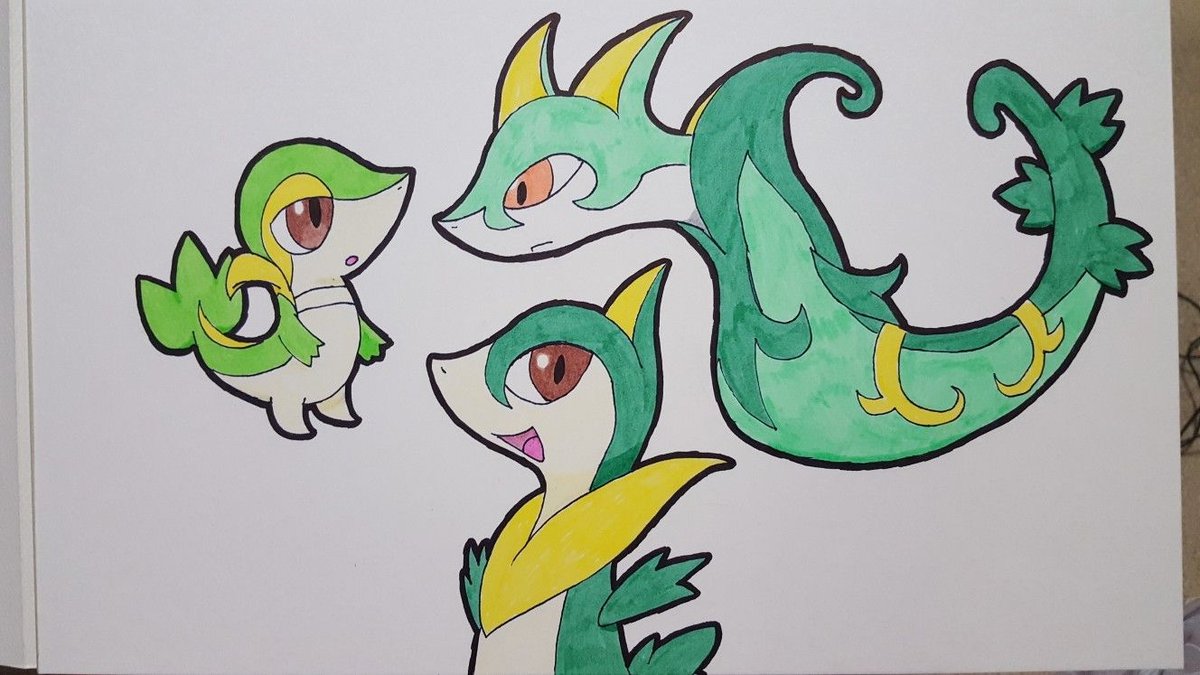
The elegant Grass-type starter from Unova, Snivy, isn't just a charming companion; it's the genesis of one of Pokémon's most strategically potent and visually stunning creatures: Serperior. If you're looking to understand every nuance of Snivy's Evolution Line & Strategy Guide, from its humble beginnings to its reign as a competitive powerhouse, you've come to the right place. We'll delve into its evolution path, explore optimal strategies in both main series games and Pokémon GO, and uncover how its Hidden Ability can turn battles on their head.
Snivy's Journey: An At-a-Glance Guide
Before we dive deep, here’s a quick overview of what makes the Snivy line so special:
- Type: Pure Grass (all stages).
- Evolution Levels: Snivy evolves into Servine at Level 17, and Servine evolves into Serperior at Level 36.
- Pokémon GO: Requires 25 Candy for Servine, 100 for Serperior.
- Key Strength: Serperior boasts exceptional Speed and solid defenses.
- Game-Changer Ability: Serperior's Hidden Ability, Contrary, reverses stat changes, turning moves like Leaf Storm into potent Special Attack boosts.
- Competitive Role: Primarily a fast Special Sweeper, especially dangerous with Contrary.
- Modern Availability: Catch Snivy in Pokémon Scarlet and Violet via The Indigo Disk DLC.
From Grass Snake to Regal Serpent: Snivy's Core Evolution Path
Snivy, Pokedex #495, was first introduced to trainers in the vibrant Unova region during Generation V. This initial form, measuring 0.6 meters and weighing a mere 8.1 kilograms, perfectly embodies its Grass typing with its sleek green body and leaf-like tail. Its evolution journey transforms it from a cute, confident snake into a formidable, majestic serpent.
The First Ascent: Snivy to Servine
Your Snivy's first major growth spurt happens relatively early in its journey. At Level 17, Snivy will gracefully evolve into Servine. This isn't just a cosmetic change; Servine provides a substantial boost across its stats. You'll see significant increases in HP, Attack, Special Attack, Special Defense, and Speed—often by 15-20 points each, leading to a total stat increase of around 105 points. This early evolution is incredibly advantageous for your in-game playthroughs, making Servine a more robust and reliable team member as you progress through gyms and challenges.
Reaching Royalty: Servine to Serperior
The true culmination of Snivy's potential arrives when Servine reaches Level 36. At this point, it evolves into the regal Serperior, a Pokémon renowned for its speed, grace, and strategic depth. In the core series games, this evolution, like its predecessor, is purely dependent on reaching the specified level. There are no special items, time-of-day requirements, or friendship levels to worry about; just good old-fashioned training.
Delaying Evolution: When and Why You Might Want To
While evolving early often means better stats, there's a specific tactic that seasoned trainers sometimes employ: delaying evolution. During the evolution animation in the main series games, you have the option to press the B button to halt the process. Why would you do this?
The primary reason is to allow your Snivy (or Servine) to learn certain moves earlier than its evolved forms. Sometimes, pre-evolutions learn powerful moves at lower levels that their evolved counterparts might learn much later, or not at all through leveling up. If you delay the evolution, your Pokémon will attempt to evolve again at its next level-up, giving you another chance to proceed or delay further. This strategic decision can be crucial for optimizing a specific moveset before Serperior's ultimate transformation.
Catching Your Snivy: Where to Find This Grass Gem
For many, the first encounter with Snivy was at the start of their Unovan adventure, choosing it as their very first partner. However, if you're looking to catch a wild Snivy in more recent titles, the process is a bit different.
Modern Hunting Grounds: Snivy in Scarlet & Violet's Indigo Disk
Good news for trainers in the Paldea region: Snivy and its entire evolution line are available in Pokémon Scarlet and Violet, specifically through The Indigo Disk DLC. To find this elusive starter, you'll need to head to the Terarium at Blueberry Academy.
Here's the catch: Snivy won't just appear immediately. You'll need to contribute Blueberry Points (BP) to the Terarium Club to upgrade the Savanna Biome's biodiversity. Once you've contributed enough BP to enhance the biome, Snivy will begin appearing in the wild within the Savanna Biome itself. So, get ready to earn some BP through various club activities and prepare for your hunt!
Snivy's Evolution in Pokémon GO: Candy, Companions, and Progress
Pokémon GO offers a distinct path for evolving your Snivy, trading level-ups for a system of candies and buddy partnerships.
The Candy Count: Evolving Your Mobile Snivy
In Pokémon GO, the evolution journey of Snivy is straightforward:
- Snivy to Servine: Requires 25 Snivy Candy.
- Servine to Serperior: Requires 100 Snivy Candy.
This means you'll need a total of 125 Snivy Candies to take a Snivy all the way to Serperior.
Gathering Snivy Candy: Your Best Strategies
Accumulating Snivy Candy is key. Here are the most effective ways to do it in Pokémon GO:
- Catching Snivy: The most direct method. Each Snivy caught typically yields 3 candies (or 6 with a Pinap Berry).
- Hatching Eggs: Snivy can occasionally hatch from eggs, providing a generous amount of candy upon hatching.
- Using Pinap Berries: Feed a Pinap Berry to a wild Snivy before catching it to double the amount of candy you receive. This is incredibly efficient during Snivy-focused events or Community Days.
- Setting as a Buddy Pokémon: Make Snivy your Buddy Pokémon, and it will find candies for you as you walk. The distance required varies, but it's a reliable passive income of candy over time.
- Transferring Pokémon: Sending unwanted Snivy to Professor Willow grants one candy per Pokémon.
By combining these methods, you can quickly gather the necessary candy to evolve your Snivy into a magnificent Serperior on the go!
Serperior Unleashed: Understanding Its Power & Weaknesses
Once your Snivy has reached its ultimate form, Serperior, you'll have a Pokémon of unparalleled speed and strategic depth at your disposal.
A Closer Look at Serperior's Stats and Typing
Serperior is a pure Grass-type Pokémon, a typing that comes with both advantages and disadvantages. Let's break down its base stats:
- HP: 75
- Attack: 75
- Defense: 95
- Special Attack: 75
- Special Defense: 95
- Speed: 113
- Total: 528
These stats paint a clear picture: Serperior is built for high Speed and solid defenses. Its offensive stats (Attack and Special Attack) are merely average at 75, suggesting it needs a special boost to hit hard. That's where its abilities come in.
Abilities That Define It: Overgrow vs. Contrary
Serperior has two distinct abilities, but one stands out as a true game-changer:
- Overgrow (Standard Ability): This familiar ability boosts the power of Serperior's Grass-type moves by 50% when its HP falls below 1/3 of its maximum. While useful for a last-ditch effort, it's generally considered less impactful than its Hidden Ability.
- Contrary (Hidden Ability): This is the ability that truly defines Serperior's competitive viability. Contrary reverses the effects of stat changes; moves that would normally lower a stat will raise it instead, and vice-versa. This unique mechanic turns Serperior into a terrifying force.
Type Matchups: Serperior's Strengths and Vulnerabilities
As a pure Grass-type, Serperior has a specific set of resistances and weaknesses:
- Weaknesses (takes 2x damage): Fire, Ice, Poison, Flying, Bug. These five types are your primary concerns when facing Serperior in battle.
- Resistances (takes 0.5x damage): Water, Grass, Electric, Ground. Serperior can confidently switch into attacks from these types.
Understanding these matchups is crucial for both using Serperior effectively and knowing how to counter it.
The Allure of the Shiny Serperior
For collectors and aesthetic enthusiasts, the shiny form of Serperior is particularly striking. While its standard form is predominantly green with yellow accents, a shiny Serperior features a beautiful deep blue body complemented by vibrant teal markings. Its piercing red eyes remain, creating a truly regal and distinct appearance that stands out on the battlefield.
Mastering the Battlefield: Serperior's Competitive Strategy (2026 Meta)
In the dynamic world of competitive Pokémon, Serperior with its Hidden Ability, Contrary, is not just viable—it's highly viable and has been a consistent threat across multiple generations. Its strategy is both simple in concept and devastating in execution.
Why Contrary Serperior Dominates
Serperior's dominance in competitive play hinges almost entirely on its Hidden Ability, Contrary. Without it, Serperior's average Special Attack of 75 would make it difficult to sweep opponents. With Contrary, however, Serperior becomes one of the most dangerous special attackers in the game.
The Leaf Storm Loop: A Sweeper's Dream
The core strategy revolves around the move Leaf Storm. This powerful Grass-type attack typically carries a significant drawback: it lowers the user's Special Attack by two stages after use. But with Contrary, this negative effect is flipped on its head. Each time Serperior uses Leaf Storm, its Special Attack is raised by two stages.
This creates a terrifying snowball effect. One Leaf Storm makes Serperior stronger, two make it incredibly potent, and three or more can sweep entire teams. Opponents are put in a difficult position: if they don't deal with Serperior quickly, it becomes unstoppable. Furthermore, any attempt to lower Serperior's stats (e.g., using Icy Wind to lower Speed or Snarl to lower Special Attack) will actually benefit Serperior, raising its stats instead.
Building Your Champion: Recommended Competitive Set
To unleash the full power of a Contrary Serperior, a specific build is often recommended for the current competitive meta (as of 2026):
- Item: Leftovers or Focus Sash
- Leftovers: Provides passive HP recovery, helping Serperior stay healthy while it sets up or takes hits.
- Focus Sash: Guarantees Serperior will survive at least one hit from full HP, allowing it to get off at least one Leaf Storm to boost its Special Attack.
- Ability: Contrary
- As discussed, this is non-negotiable for competitive Serperior.
- Tera Type: Fire or Ground
- Fire: Provides excellent offensive coverage against Steel, Bug, and Grass types that resist Leaf Storm. It also flips Serperior's weakness to Ice and Bug, turning them into resistances or neutral hits.
- Ground: Offers coverage against Fire, Poison, and Rock types, also helping with Fire weakness.
- Nature: Timid (+Speed, -Attack)
- Maximize Serperior's already impressive Speed stat, ensuring it outspeeds as many threats as possible to set up or attack first. Its physical Attack stat is irrelevant for this special attacking set.
- Moves:
- Leaf Storm: Your primary Grass-type STAB (Same-Type Attack Bonus) move and Special Attack setup. This is the lynchpin of the strategy.
- Giga Drain: A secondary Grass-type attack that deals damage and recovers HP. It's weaker than Leaf Storm but offers sustain, especially useful if you don't want to continually lower your Special Attack by using Leaf Storm (if Contrary gets suppressed) or simply need to recover health.
- Tera Blast: Crucial for leveraging your chosen Tera Type (Fire or Ground) for coverage. It turns into a Special attack when Serperior's Special Attack is higher than its Attack, which it will be with a Timid nature and Leaf Storm boosts.
- Substitute / Glare:
- Substitute: Creates a decoy that absorbs a hit, giving Serperior a free turn to boost with Leaf Storm or scout the opponent's move.
- Glare: A status move that inflicts Paralysis on the opponent. Unlike most status moves, Glare affects all Pokémon, including Ghost-types, making it a reliable way to slow down faster threats or cripple defensive walls.
Outmaneuvering Opponents: Serperior's Threat Level
A Contrary Serperior demands immediate attention. Opponents must quickly switch in a faster Pokémon with a super-effective attack (preferably an offensive Tera user) or try to inflict a status condition like Sleep or Freeze. Failing to address Serperior's setup can easily lead to a clean sweep, making it one of the most intimidating Special Sweepers in the competitive landscape.
The Unova Starter Lineup: Serperior's Place Among Its Peers
The Generation V starters—Snivy, Tepig, and Oshawott—each evolve into distinct and powerful Pokémon, fulfilling different roles on a team. Understanding how Serperior compares to its Unovan counterparts, Emboar and Samurott, helps highlight its unique strengths. If you want a deeper dive into all the Pokemon 5th gen starters, we've got a comprehensive guide just for you.
- Serperior (Grass): As we've extensively covered, Serperior excels as a fast Special Sweeper. Its high Speed (113) combined with the game-changing Contrary ability and Leaf Storm makes it a unique threat, capable of snowballing Special Attack to dismantle teams.
- Emboar (Fire/Fighting): The final evolution of Tepig, Emboar is a slow Physical Wallbreaker. With high Attack and a powerful offensive typing (Fire/Fighting), it's designed to punch holes through defenses. However, its low Speed makes it vulnerable.
- Samurott (Water): Oshawott's final form, Samurott, typically functions as a mixed attacker with fairly balanced offensive stats. While its base form is solid, its Hisuian form, introduced in Pokémon Legends: Arceus, takes on a more potent physical attacking role with a Water/Dark typing, making it a top-tier physical attacker in that specific meta.
In essence, Serperior carves out its niche through unparalleled Speed and a singular, devastating setup strategy, offering a distinct playstyle compared to the brute force of Emboar or the balanced offense of Samurott.
Your Next Steps to Serperior Mastery
Whether you're embarking on a nostalgic playthrough of a Generation V title, meticulously building a competitive team for the current meta, or collecting every Pokémon in GO, mastering Snivy's evolution into Serperior is a deeply rewarding experience.
Start by securing your Snivy, whether it's through a starter choice in Unova, a dedicated hunt in the Savanna Biome of the Terarium, or diligent candy farming in Pokémon GO. Pay attention to its nature and ability, especially if you're aiming for competitive battles, where a Timid, Contrary Serperior reigns supreme. Practice the Leaf Storm strategy, understand its type matchups, and integrate it effectively into your team. With a little guidance and strategic foresight, your Snivy will not just evolve; it will ascend to become the majestic, battle-dominating Serperior you envision.